

Objective
To heat a solution in a beaker safely and effectively .
Theory
Heating a solution in a beaker is a common laboratory technique used for various purposes such as dissolving solutes, conducting chemical reactions, or evaporating solvents. Here are some general steps and considerations for heating a solution in a beaker:
- Choose the Right Beaker:
Use a heat-resistant glass or metal beaker that can withstand the temperature you plan to reach. Most standard laboratory glassware is suitable for moderate heating, but for higher temperatures or specialized applications, choose appropriate materials.
2. Safety Precautions:
Ensure proper ventilation in the laboratory. Always wear appropriate personal protective equipment (PPE) like safety goggles and gloves. Be aware of the location of emergency equipment and familiarize yourself with the emergency procedures.
3. Select the Appropriate Heating Source:
Common heating sources include Bunsen burners, hot plates, or electric heaters. Choose the one that best suits your needs and the specific requirements of your experiment.
4. Set Up the Apparatus:
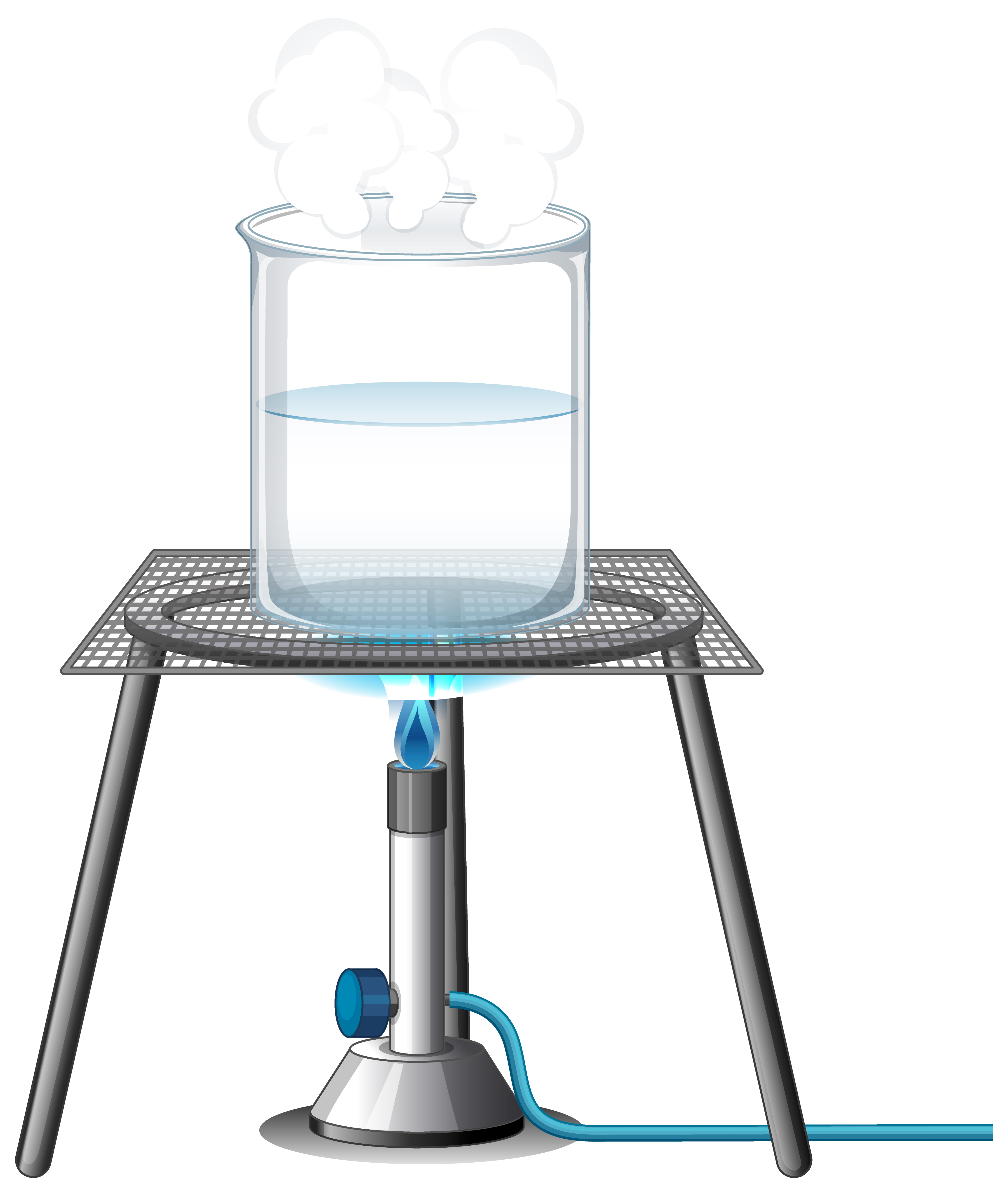
Place the beaker on the heating source. Use a tripod or a suitable support to ensure proper stability. If using a Bunsen burner, adjust the flame to the desired intensity.
5. Stirring:
Stir the solution if necessary to promote even heating. Use a magnetic stir bar or a glass stirring rod. Stirring helps distribute heat uniformly and prevents localized overheating.
6. Monitoring Temperature:
Use a thermometer to monitor the temperature of the solution. Avoid rapid heating, as this can lead to splattering or boiling over.
.png)
Fig. 1 Bunsen burner
7. Avoid Boiling Over:
If the solution is prone to boiling over, consider using a larger beaker or reducing the heating intensity. Place a watch glass or a suitable cover on the beaker to minimize evaporation and splattering.
8. Control the Heating Rate:
Gradually increase the temperature to prevent sudden boiling. This is particularly important when working with volatile or reactive substances.
9. Cooling:
Allow the solution to cool before handling or further processing. Use caution when removing hot glassware from the heating source.
10. Clean Up:
Once you have finished heating the solution, turn off the heating source and let the apparatus cool down. Clean the beaker and any other equipment used in the process.
Common safety precautions:
- Always wear a lab coat, safety goggles, and closed-toe shoes.
- Avoid the use of soda glass or soft glass.
- Be careful while using a Bunsen burner.
- Use porcelain chips to avoid bumping of the solution.
- Use designated waste containers for chemical disposal.
Importance of glassware:
When heating a solution in a beaker, the properties of the glassware are crucial. Beakers are commonly made of borosilicate glass due to its beneficial properties:
- Thermal Expansion: Borosilicate glass has a low thermal expansion rate, reducing the risk of breakage under rapid temperature changes.
- Safety Considerations: It can withstand high temperatures, ensuring safe heating without cracking.
- Uniform Heating: It allows consistent heating of the solution, which is essential for accurate results.
- Chemical Inertness: It does not react with most chemicals, preventing contamination or unwanted reactions.
- Transparency: Its clarity allows observation of changes during heating.
- Durability: More robust than regular glass, borosilicate glassware can be reused multiple times without losing integrity.
Learning Outcomes
Students understand,
- The concept of heating of solution in a beaker.
- The common safety precautions.
- About the importance of the glassware.